Compensating Workers and AI: A Delicate Balance
Compensate workers or AI?
A new survey found that more than half (56%) of respondents say it is very or critically important to share the rewards that AI creates with workers, yet most organizations (77%) aren’t doing anything meaningful about it. Leaders are still figuring out what “fair” looks like in an AI-enabled workplace, according to Deloitte’s 2025 Global Human Capital Trends report.
Only 23% of organizations are doing something meaningful to share the rewards AI creates with workers, the Deloitte report said.
Do employees think of AI as a coworker?
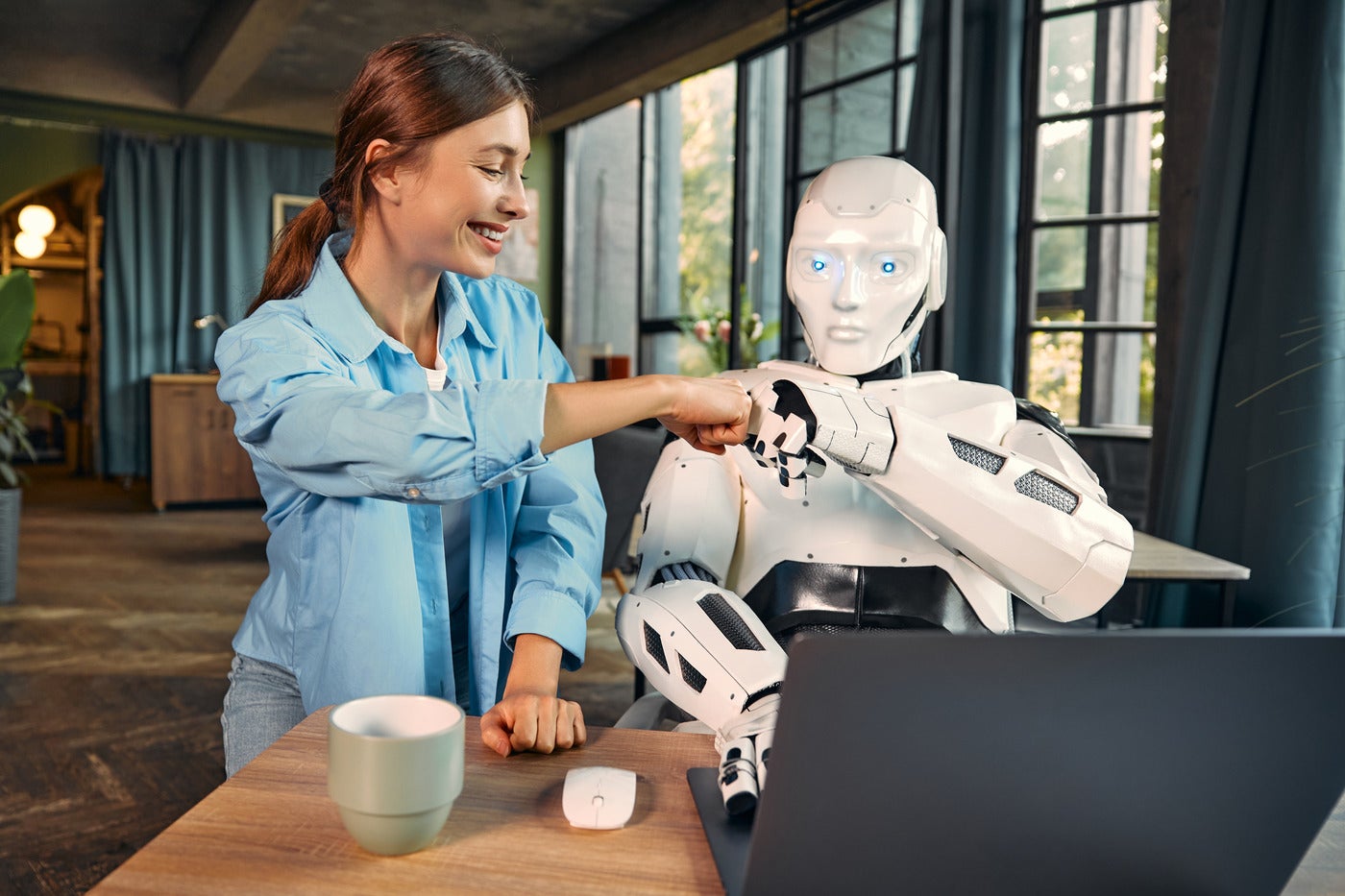
Deloitte’s research found a “possible era of convergence” between humans and machines. For example, six in 10 workers already think of AI as a coworker. The report pointed to signs of this, including:
- Technology is becoming more human with more human-like interfaces.
- Robots increasingly resemble and mimic humans.
- Digital agents are acting on people’s behalf.
- Humans are teaching AI, and AI is teaching humans.
This means organizations will have to rethink how they can help their employees continue to thrive in a world where AI is reshaping work and how it is done. Deloitte recommended that organizations revise the employee value proposition (EVP) to realize both human and business outcomes “as AI becomes increasingly intertwined with workers.”
Top concerns about AI’s “silent impacts”
While AI often does easy, rote work, it may also reduce one-on-one interactions, contributing to loneliness and isolation, according to the report. It can also contribute to burnout.
The Deloitte report recommends that organizations’ EVPs “incorporate a clear understanding of AI’s impact on work, workers, and people’s relationship with employers.”
Conclusion
The report highlights the need for organizations to revisit their employee value proposition in the age of AI. By doing so, they can build loyalty, trust, and long-term value. As Kyle Forrest, future of HR leader at Deloitte Consulting, said, “Over 70% of workers and managers say they’re more likely to stay with an organization that helps them thrive in an AI-powered world.”
FAQs
Q: What is the importance of sharing the rewards AI creates with workers?
A: According to the survey, more than half (56%) of respondents say it is very or critically important to share the rewards that AI creates with workers.
Q: What percentage of organizations are doing something meaningful to share the rewards AI creates with workers?
A: Only 23% of organizations are doing something meaningful to share the rewards AI creates with workers, the Deloitte report said.
Q: What is the “era of convergence” between humans and machines?
A: Deloitte’s research found a “possible era of convergence” between humans and machines, characterized by signs such as technology becoming more human-like, robots resembling and mimicking humans, digital agents acting on people’s behalf, and humans teaching AI and AI teaching humans.
Q: What are the top concerns about AI’s “silent impacts”?
A: According to the report, AI’s “silent impacts” include reducing one-on-one interactions, contributing to loneliness and isolation, and contributing to burnout.
Q: How can organizations help employees thrive in an AI-powered world?
A: Deloitte recommends that organizations revise the employee value proposition (EVP) to realize both human and business outcomes “as AI becomes increasingly intertwined with workers.” They should also incorporate a clear understanding of AI’s impact on work, workers, and people’s relationship with employers.